Scribe · 0 → 1 · Multimodal AI Systems · 2024 – 2026
Designing AI memory for D&D
Scribe is a multi-modal, AI-powered app that transforms recorded TTRPG gameplay into narrative summaries, generated scene imagery, and a self-updating campaign wiki.
500+
Users since launch
~2,000hrs
Of gameplay audio processed
5×
Repeat usage after launch fixes
Background
Tabletop campaigns have a memory problem
The disappearing campaign
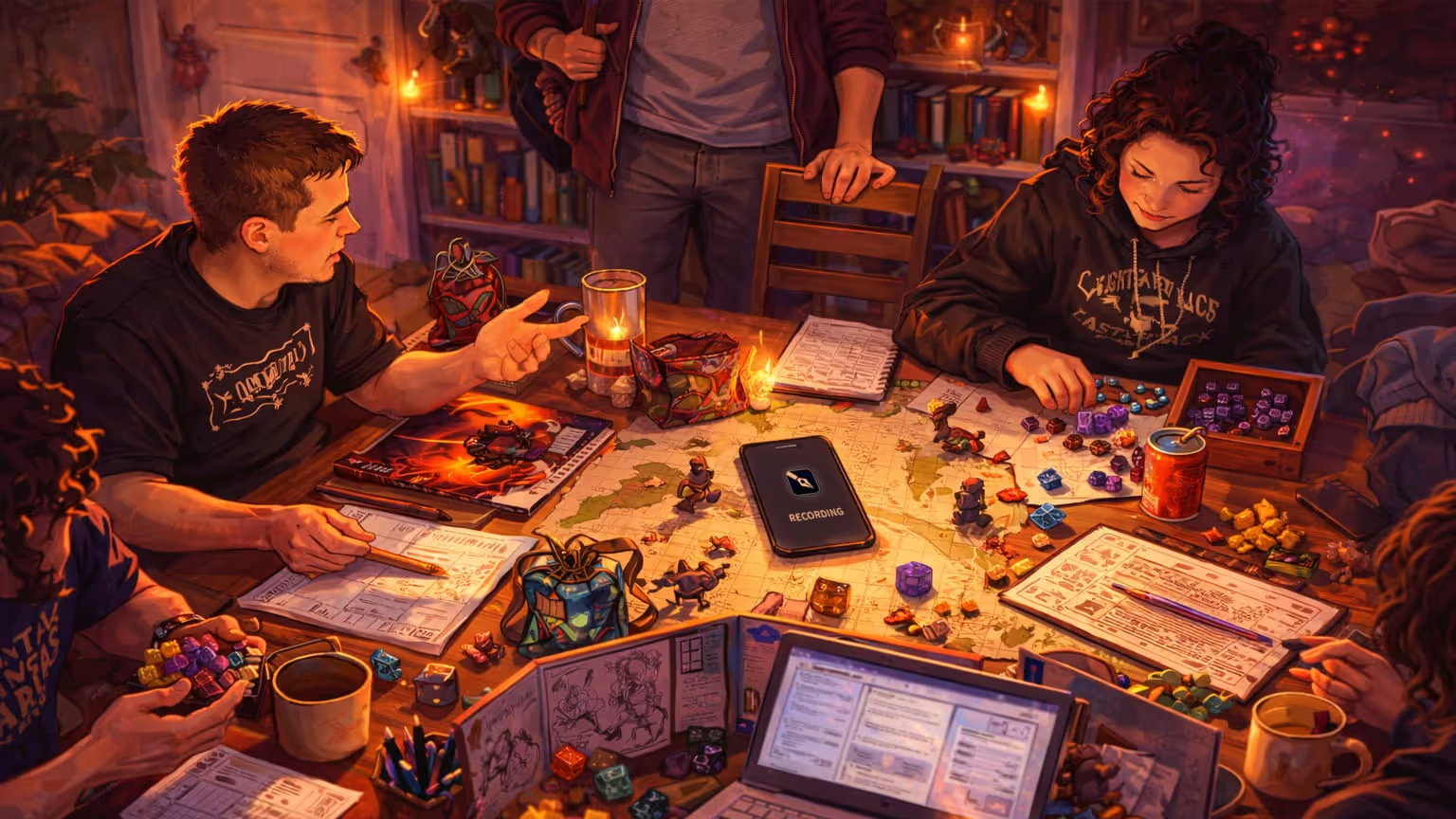
I was the Dungeon Master. Casual games with close friends: no strict rules, no note-taking, just a group improvising a story together every couple of weeks.
The problem was continuity. Players needed to remember what happened three sessions ago: who they owed a favor to, what that merchant actually said, why the party was headed to this town in the first place. That memory usually falls to the DM, who is already managing the world, the rules, the pacing, and every NPC at the table. Nobody was going to start taking notes, so as the sessions stacked up the story kept getting shallower.
A personal exploration
In late 2023, I came across AI meeting transcription for the first time and had a simple question: could this work for D&D? I recorded one of our sessions and ran it through one of the early tools.
The result: "In the long meeting, coworkers discussed a fantasy world in which a caravan of traveling merchants were ambushed by a horde of goblins. Action items: assess caravan losses. Escalate goblin threat to leadership."
The transcription was accurate. It just had no idea what it was listening to. The technology existed; it just needed to understand what a campaign was. So I built Scribe: a multi-modal AI app that turns recorded TTRPG gameplay into a written recap, illustrated scenes, and a campaign wiki that keeps itself current. I led product design and marketing, but also scoped what the AI should extract, how to parse it, and what to surface. I wasn't just designing interfaces. I was defining what the product was.
System Architecture
From session audio to a structured campaign knowledgebase
Delivering on "just press record" meant transforming a single recording into several forms of structured output (narrative summaries, visual scenes, and structured campaign knowledge) all before the players got home. The pipeline below shows how that works, from raw audio to finished campaign record. Most sessions complete in five to ten minutes.
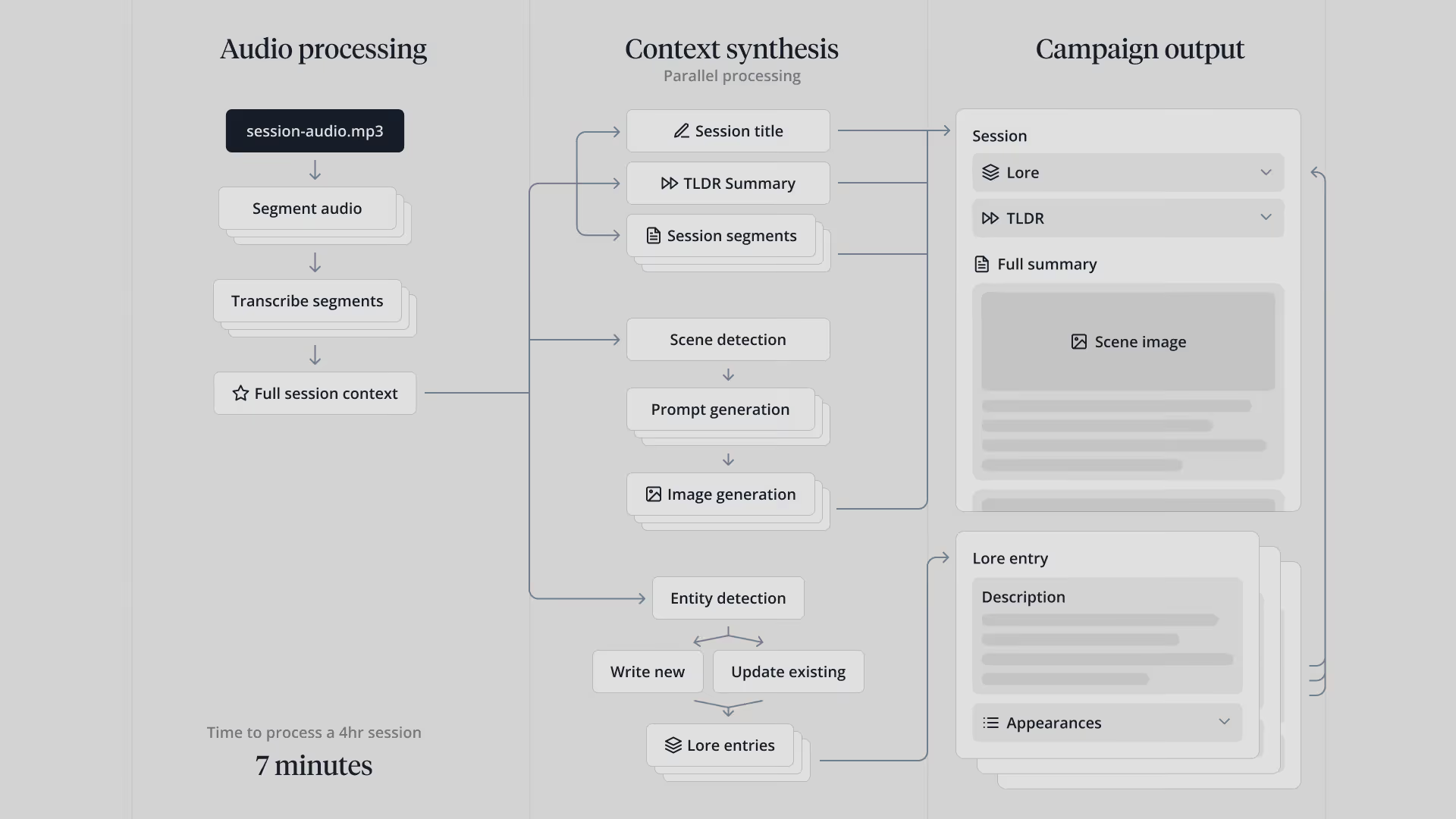
Three-stage processing pipeline · ~7 minutes from upload to finished campaign record
Core Features
Designing for both casual players and professional worldbuilders
Some players want a clean recap. Others want to shape every detail of the story they've created. I designed Scribe around the fastest possible path to great output: automatic results that require almost no effort, while still giving power users the tools to refine and shape something precise.
Smart features for seamless storytelling
Once a session is processed, Scribe gives players six ways to read, refine, and explore the campaign, from the headline narrative recap to natural-language questions across the entire archive.
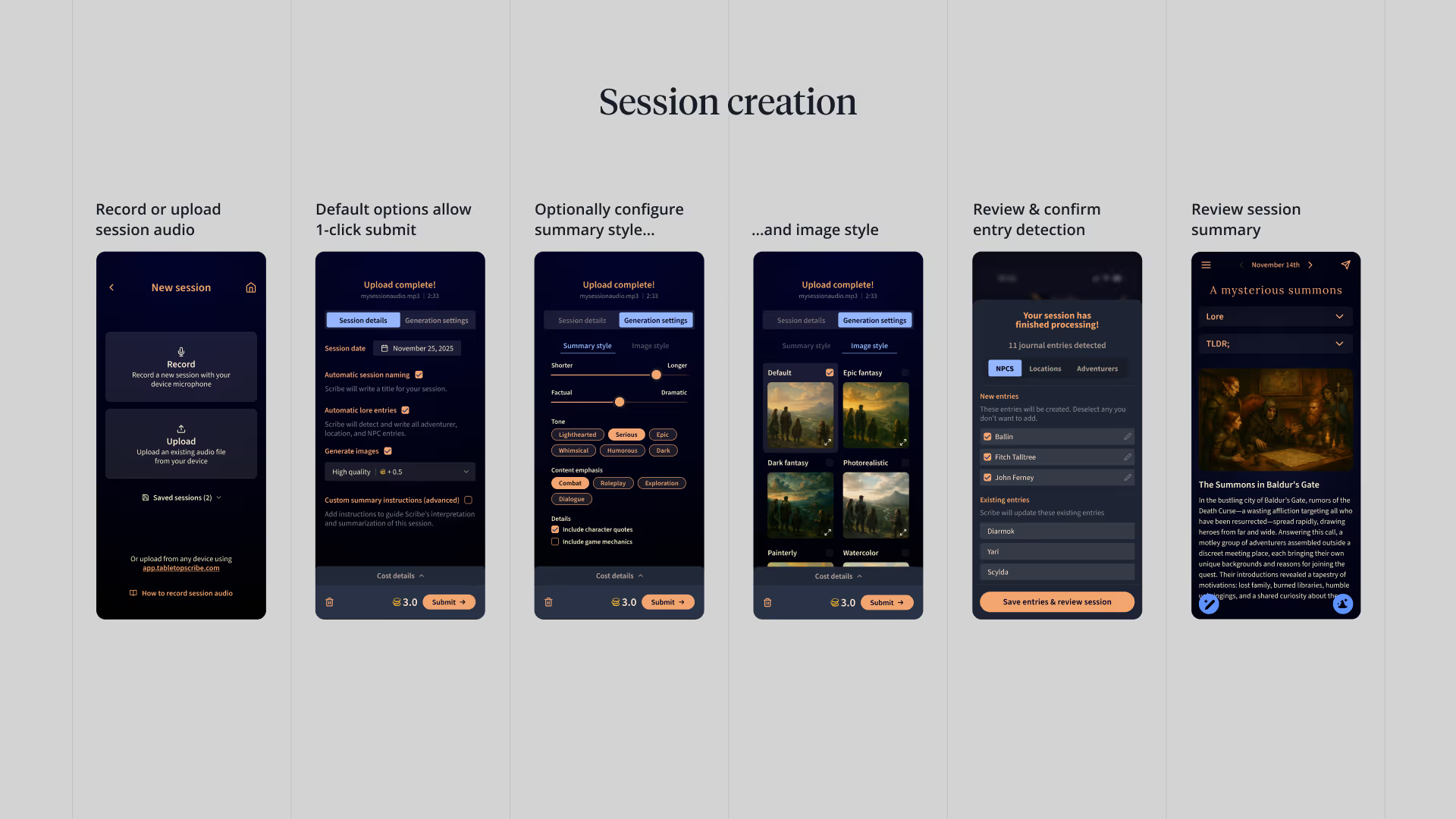
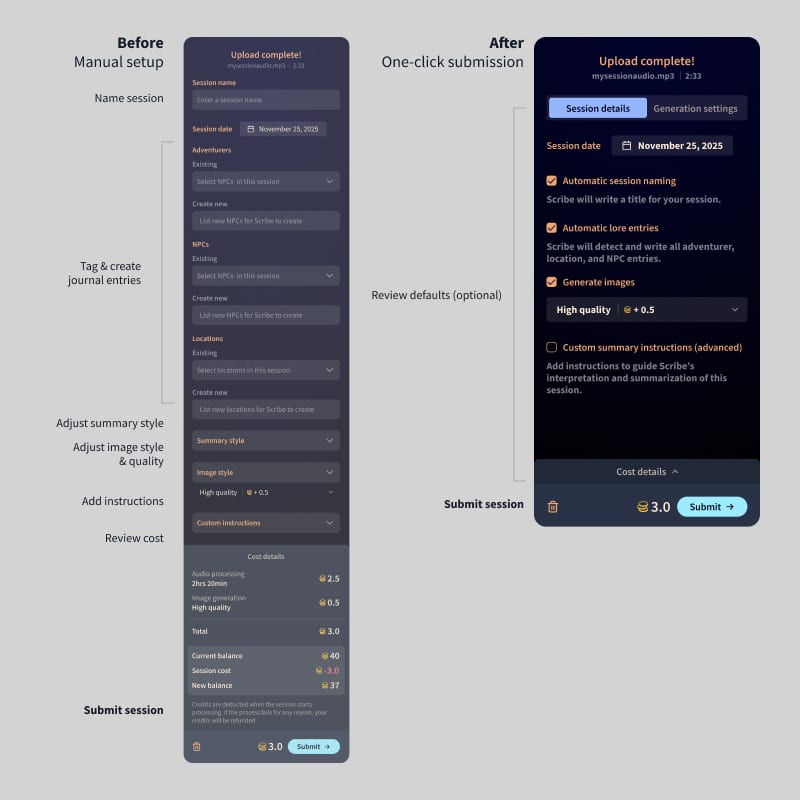
Session creation. The upload flow is designed to work in a single click. Default options allow one-click submission. Summary style, image style, and entity detection are all configurable, but none of it is required.
Session summaries. After each game, Scribe generates a narrative recap capturing the key events, character interactions, and decisions that shaped the session. For long-running campaigns, this solves the biggest continuity problem: players can simply read the story and jump back into the adventure.
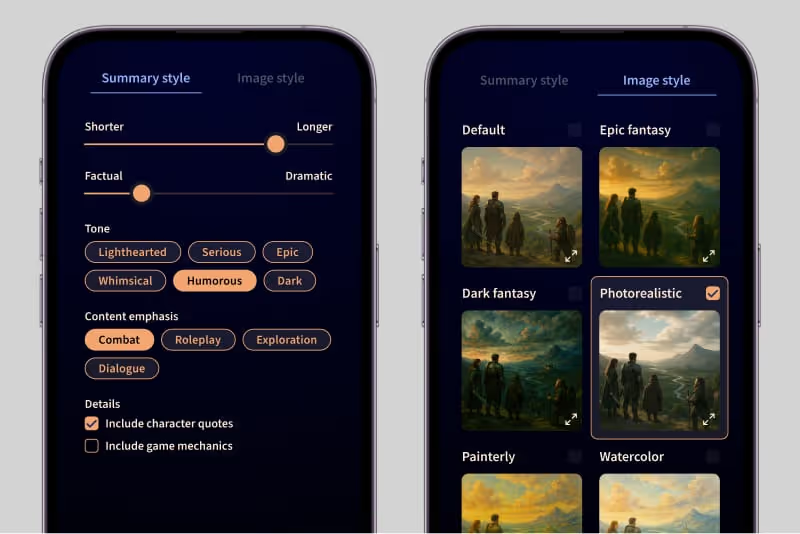
Flexible configuration. While the default output is designed to work well with no setup, users can adjust how their sessions are written. Summary length, tone, and visual style can all be configured to match the style of a particular campaign.
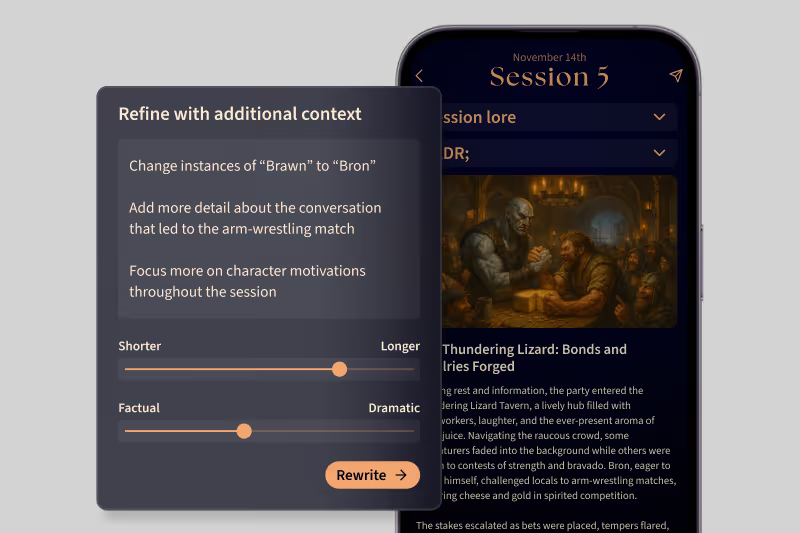
Conversational revision. For users who want more control, summaries can also be refined through a conversational interface. Ask Scribe to expand a moment, clarify a detail, or correct an inconsistency, allowing them to shape the final record of the session without rewriting it manually.
Image generation. During processing, Scribe identifies key scenes and generates illustrations that bring those moments to life. Scribe includes 14 distinct image styles, from classic fantasy illustration to anime and watercolor, so the visual record of a campaign reflects its actual atmosphere.
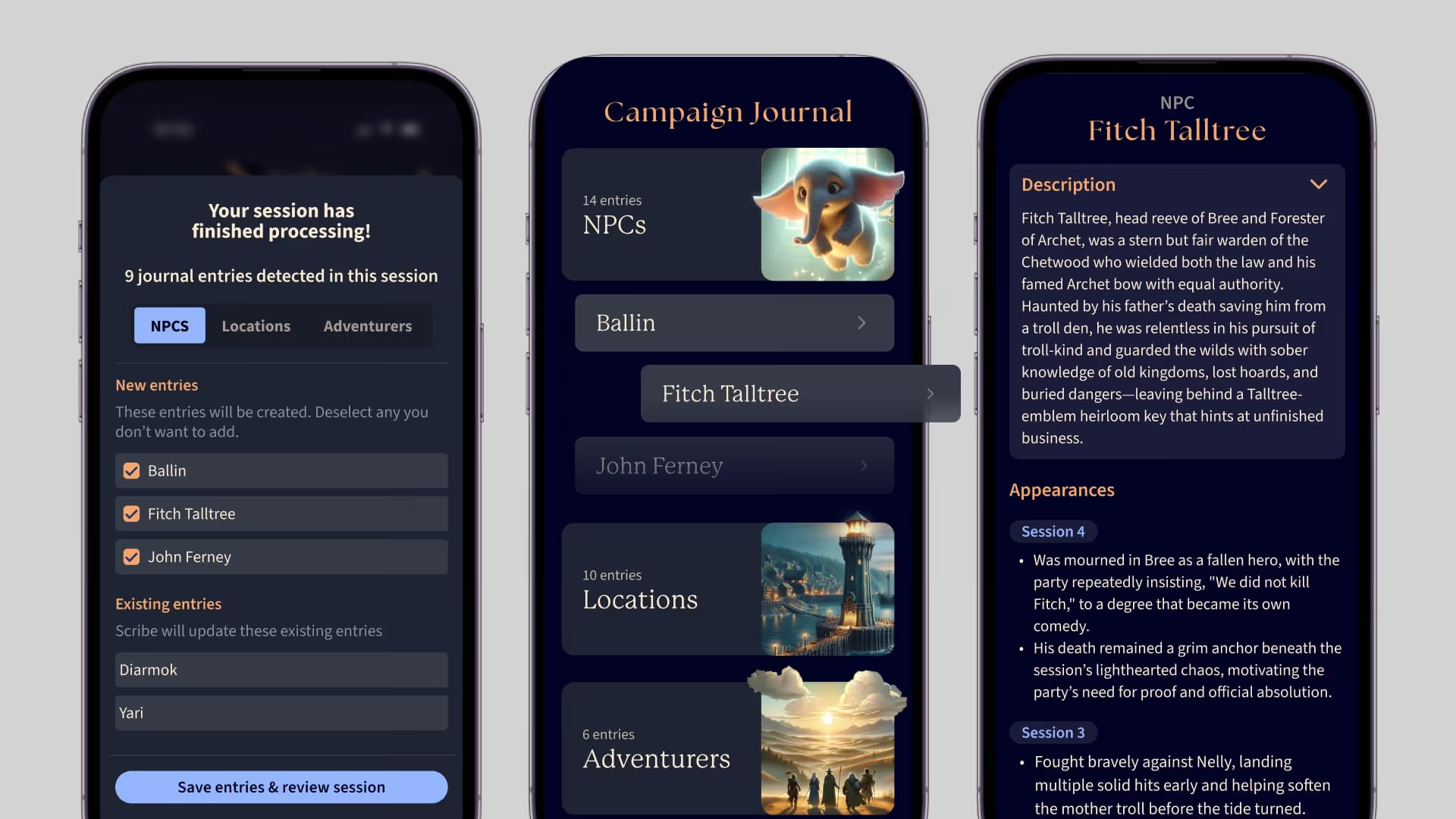
Campaign wiki. As sessions accumulate, Scribe builds a structured record of the campaign world automatically. Each entry contains a description along with references to every session where it appeared. When the same character or location shows up again, Scribe updates the entry with new information, with no manual documentation required.
Ask Scribe. Players can query their entire campaign using natural language. Instead of digging through notes or past sessions, they can simply ask questions about the world they've built together, bridging the gap between player memory and campaign memory.
Launch & Insights
The launch that looked fine
I ran the v1.0 launch in August 2025. That included everything public-facing: the website, the email campaign, the social content, the launch coordination. Downloads came in. New accounts were being created. On the surface, things looked like they were working.
About a month later, I was sketching rough conversion math in a notes file. The numbers didn't add up. Downloads were one thing, but how many of those people had actually processed a session? How many had come back for a second?
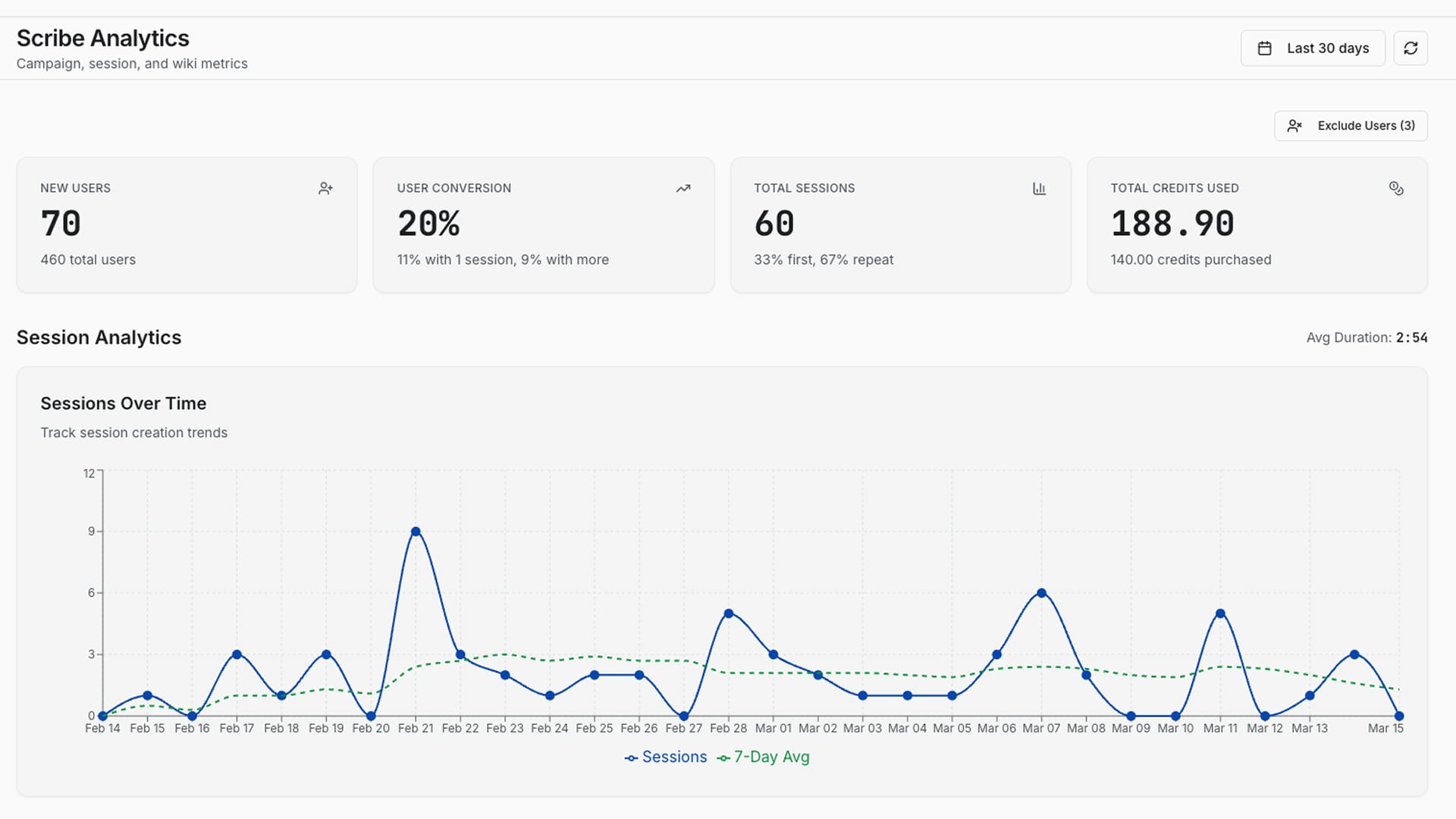
I dug into the limited analytics we had and didn't like what I found. So I built a proper dashboard using Claude Code, tracking the full conversion funnel from download through account creation, first session, repeat usage, and purchase.
The data was unambiguous. Roughly 90% of downloads dropped off before processing a single session. Of the people who made it through that first session, only 10% returned for a second.
The launch wasn't working. It had just looked like it was.
Launch & Insights
Diagnosing the conversion funnel
The dashboard gave me visibility, not answers. I had to interpret the patterns, form hypotheses, and test changes to find out what was actually blocking people.
Reducing onboarding friction
The first problem was login. About 50% of users abandoned before ever creating an account. I introduced social login, which roughly tripled the number of users reaching the main app interface.
The second was campaign setup. New users were being asked to configure a campaign before they had any context for what Scribe did. I removed the step entirely, and the system now creates a default campaign automatically. Combined with the login change, these two fixes tripled the number of people reaching the core experience.
Improving the product itself
Not all of the problems were funnel problems. A user survey revealed issues with summary quality and image reliability. I worked with the team to restructure the AI architecture and prompting, and changed the image generation model. The result was better output at lower cost.
-
Enabling 'one-click' submit
The upload flow was simplified with fewer visible options, smarter defaults, and clearer guidance. Settings that had always been optional still felt required when shown all at once, and that cognitive load was stopping people.
By hiding advanced controls and automating common tasks like session naming and entity detection, most users could just upload and press submit. First-session conversion doubled from 10% to 20%.
-
Exploring a finished campaign
The workflow was new enough that many users didn't fully understand what they'd get back before recording their first session.
I designed a fully interactive demo campaign (real summaries, images, and wiki entries) that visitors could explore before committing. Average engagement on the site jumped from about 10 seconds to over two minutes.
Outcome
Transforming sessions into stories
Since launch, Scribe has processed nearly 2,000 hours of tabletop gameplay. The product found particular traction with Dungeon Masters running regular campaigns. Our most active user has processed over 50 sessions, using Scribe as a persistent archive across multiple ongoing games.
The funnel work moved real numbers. But the more important result was the pattern underneath them. Once users understood the value, cleared the friction, and experienced stronger output quality, they came back. The product started behaving the way we had designed it to from the beginning.
Three years of testing on our own campaigns meant we understood what good output looked like before any external user did. Every session was both user research and product testing, because we were the users we were building for.
500+
Users since launch
2×
First-session conversion (10% → 20%)
5×
Paid conversion (<5% → ~25%)
3×
Users reaching the core app
What's Next
Beyond the final session
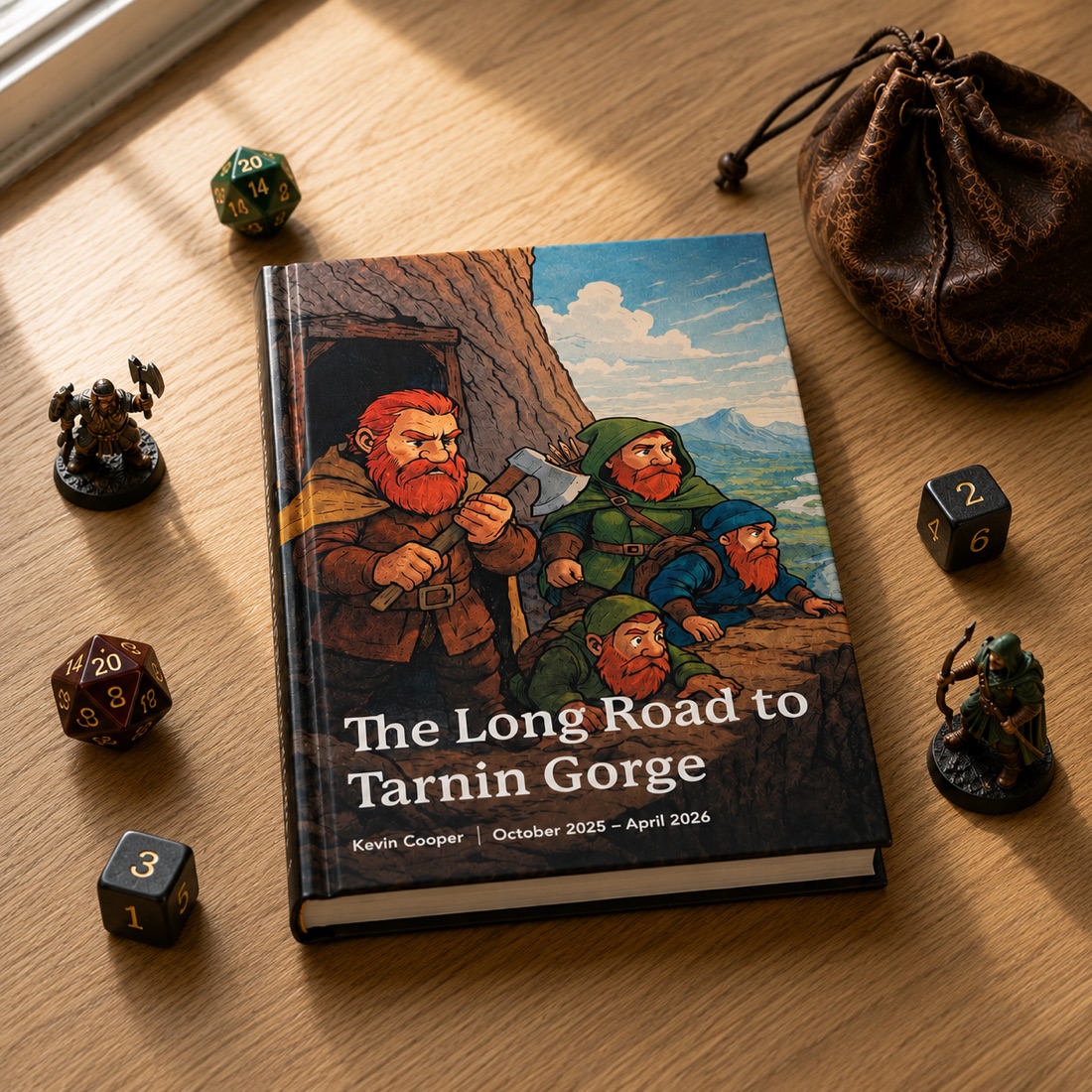
The end goal was never just a digital archive. Campaigns deserve something permanent, something players can hold onto long after the final session.
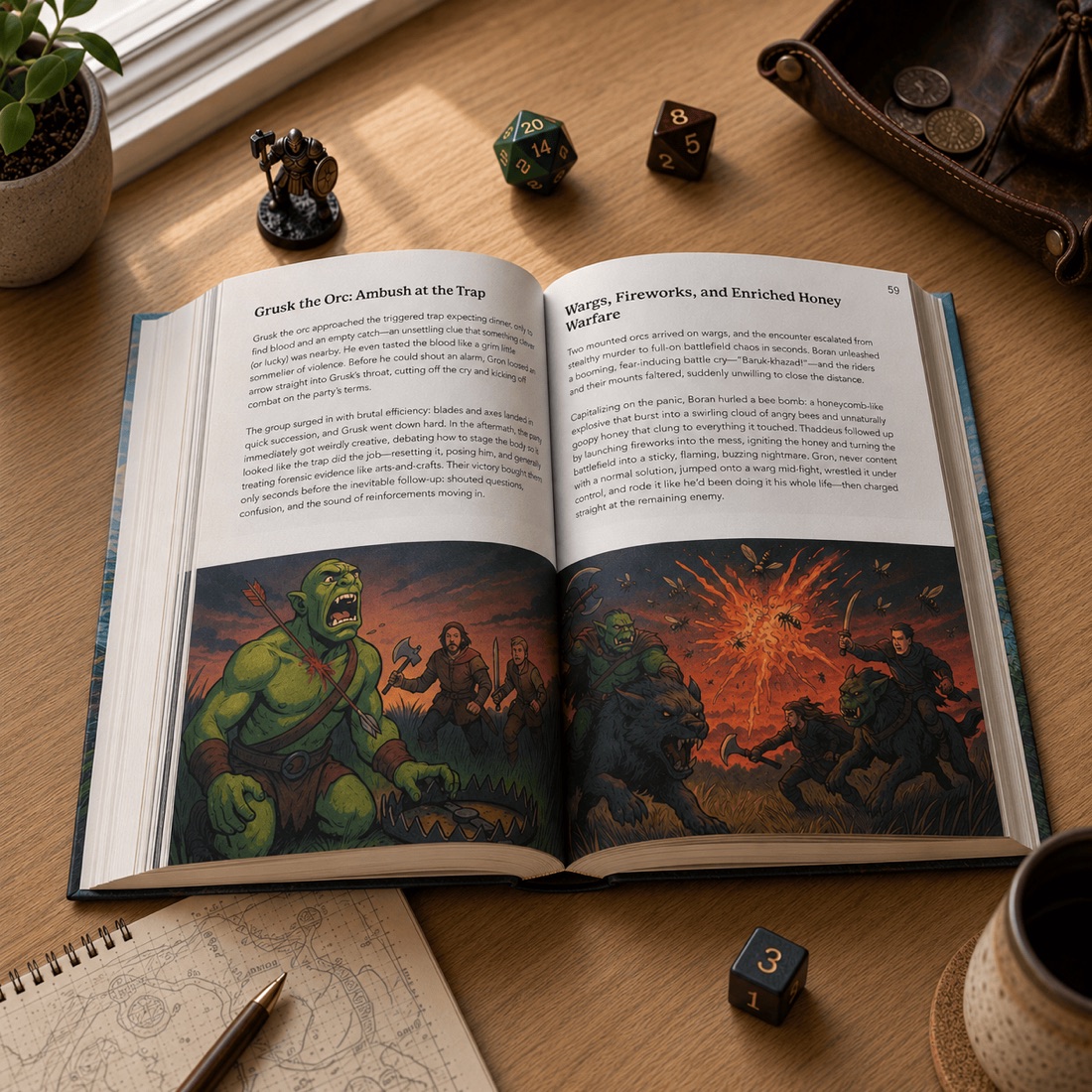
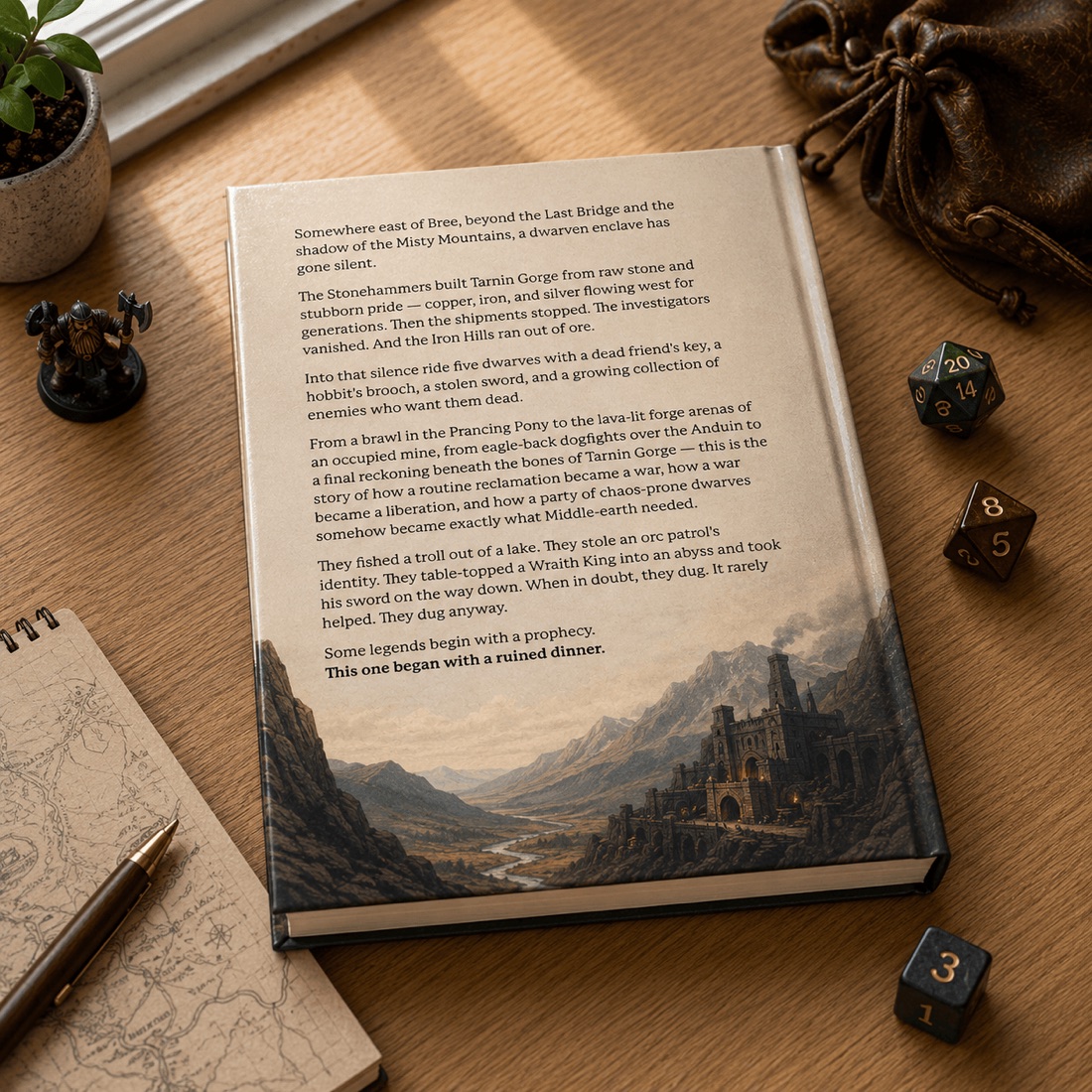
I designed a book layout and template that takes any Scribe campaign and formats it for print in under 30 minutes. Session summaries become chapters. Generated scene illustrations become full-spread artwork. The campaign wiki becomes an appendix. No manual layout work required.
For the first time, a party can close out a campaign and walk away with a hardcover record of everything they created together (the memories, the laughs, the moments nobody at the table will ever forget) and put it on a shelf.