Benchmark Analysis
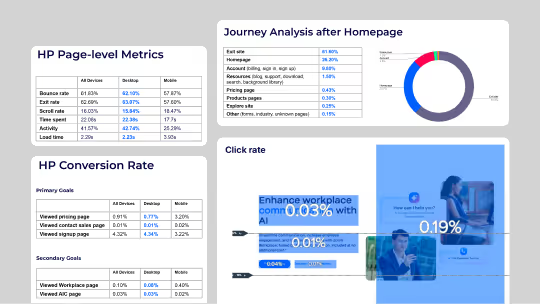
Used Contentsquare to map drop-off points, engagement patterns, and baseline conversion, identifying exactly where users were losing context and failing to progress.
Zoom · Platform Strategy · Design Leadership · Design Ops · 2025
When Zoom decided to reposition as an agentic AI platform, the website became the primary vehicle for the shift. I led the redesign across five major surfaces in 10 weeks, helping define the positioning narrative that told the world what it meant.
Background
I joined Zoom in 2021 as the web platform was still optimized for a meetings company. By 2024, Zoom offered 19 products across communication, productivity, and collaboration. The homepage still told the old story.
Shaped by years of incremental additions without structural realignment, the experience had become fragmented. Users could find individual products, but couldn't understand how they connected or why they mattered together.
We were given a broad directive to fix it. No defined point of view. No strategic brief. Just "update the homepage."
The pre-launch experience: individual products surfaced without a connecting story
Rather than designing to a brief that didn't exist, I initiated four parallel research tracks to build one.
Used Contentsquare to map drop-off points, engagement patterns, and baseline conversion, identifying exactly where users were losing context and failing to progress.
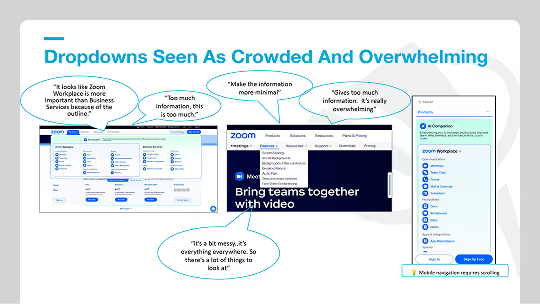
Moderated testing revealed two things that shaped everything that followed: users still primarily associated Zoom with meetings, and had almost no awareness of the 18 other products in the catalog.
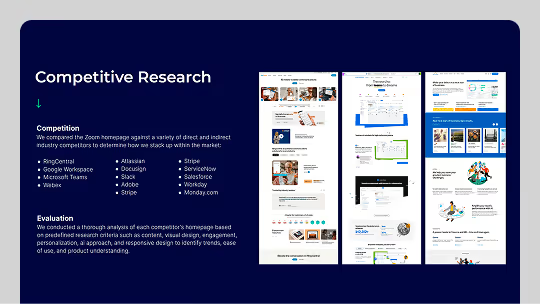
Evaluated how peer companies structured and communicated their platforms, identifying patterns that exposed gaps in Zoom's experience.
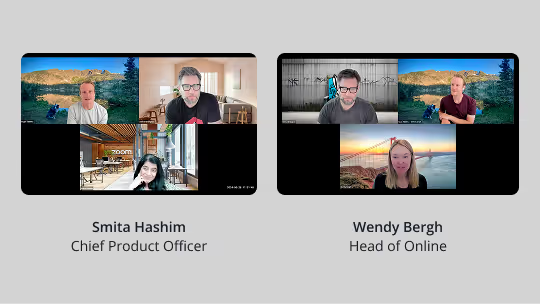
Interviewed senior leaders across Product, Marketing, Engineering, and Sales to synthesize a point of view the organization could align around.
My team synthesized the research into a strategic brief and developed three homepage concepts, each emphasizing a different priority: platform clarity, user outcomes, and AI positioning. More than presentations, they gave the team a shared vocabulary for making decisions.
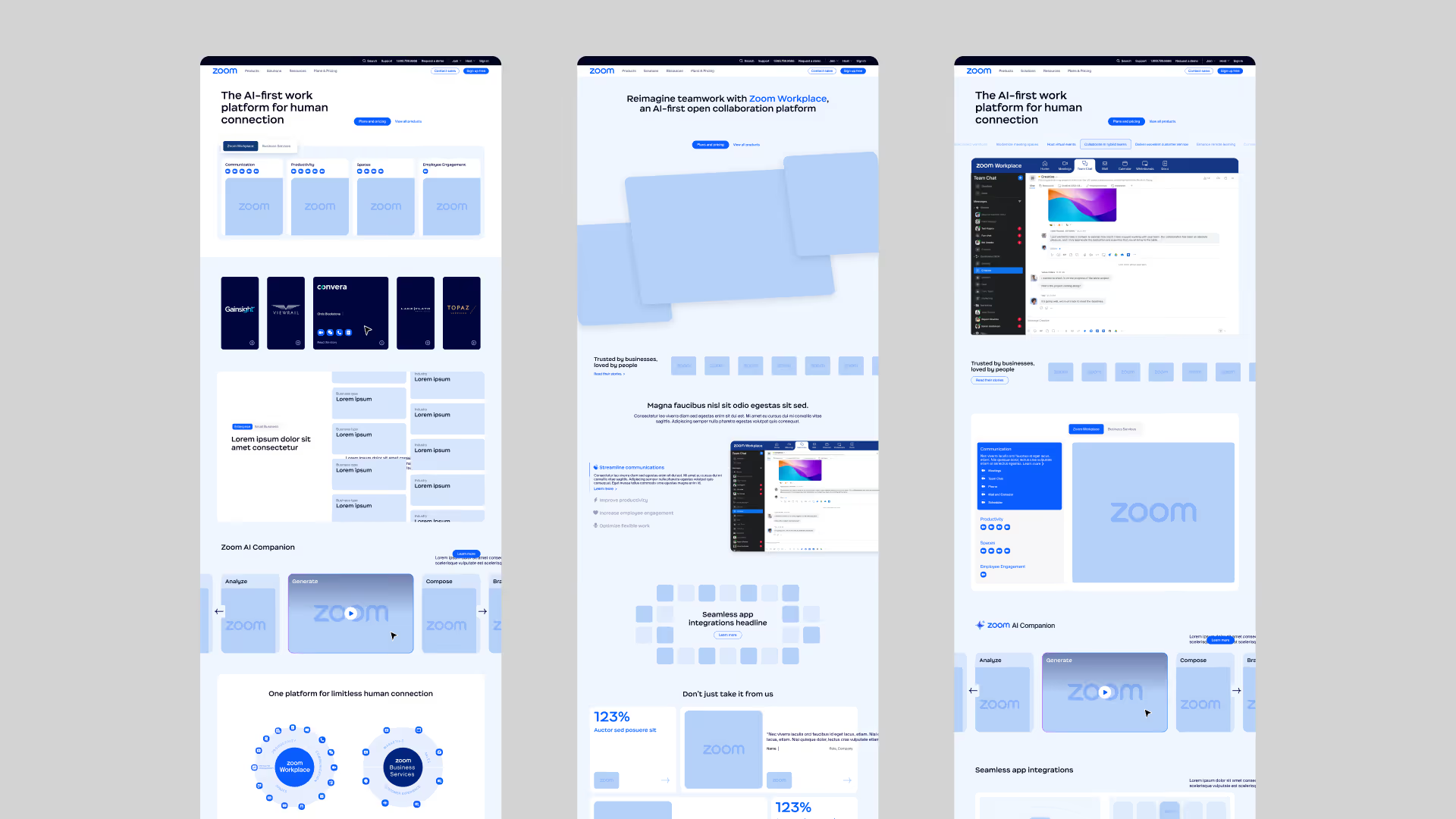
Platform-led experience. Focused on clarifying the product ecosystem, this direction emphasized how Zoom's products fit together as a unified platform. Interactive elements, like a system-level "wheel," helped visualize relationships between products and make the platform easier to understand.
Solution-led experience. Centered on user outcomes, this direction framed Zoom through the problems it solves, highlighting use cases like collaboration and productivity. It also introduced light personalization, allowing the experience to adapt to different audiences and surface more relevant content.
AI-led experience. Positioning AI as the foundation of the platform, this direction led with Zoom's AI capabilities as the primary narrative. It incorporated elements of both platform and solution storytelling, but with a stronger emphasis on AI as the unifying layer across the entire company.
Then the story changed.
Pivot
Midway through the project, we received a company-wide directive: reposition Zoom as an agentic AI platform. Public announcement at Enterprise Connect. March 2025. 10 weeks away.
This was the start of the "agentic" wave. Leadership was intent on positioning Zoom at the forefront of it. But beyond the label itself, there was almost no guidance on what that positioning should mean or how it should be communicated.
Because the website is the most visible external expression of the Zoom brand, it became the primary vehicle for articulating the shift. The homepage wasn't just supporting the new company position; it was where that position got defined.
There was no narrative to execute. We had to write one.
What began as a homepage redesign became a full web ecosystem effort: global navigation, the All Products experience, the AI Companion page, core product and marketing pages. The timeline that had 13 weeks remaining just became 10, even as the surface area roughly doubled.
Insights & Strategy
Leadership handed us a buzzword. Our research told us why that was a problem.
The qualitative study had surfaced a consistent pattern: users were curious about AI, but deeply skeptical of AI hype. Abstract capability claims landed poorly. Concrete, outcome-oriented framing landed well. Users didn't want to hear that Zoom was an "agentic AI platform." They wanted to understand what that meant for how they work.
So we filtered the directive through the research. Rather than leading with the label, we anchored the positioning in tangible outcomes, building a narrative that made the AI story credible by grounding it in things users actually care about.
Process Reinvention
With a fixed 10-week timeline and no defined narrative, our standard linear process (content, design, develop, test, launch) was no longer viable. I was responsible for coordinating work across design, engineering, Product Marketing, content, partner web teams, localization, and testing, each with their own dependencies and review cycles.
Rather than try to manage the timeline, we rebuilt the process to fit it.
Organized work into small, cross-functional pods, each responsible for a defined set of components or sections. Content, design, and engineering progressed together within each pod, in parallel. Bottlenecks dropped, and ownership lived at the section level.
Formed a cross-functional task force of team leads that met daily to resolve blockers and make decisions rather than report status. Fast feedback loop, decisions without delay.
Designed the page modularly so different narrative approaches could be tested and swapped with minimal rework. This reduced risk and set us up to validate with real data post-launch.
With incomplete information and limited time, we prioritized speed of decision-making over certainty. Cut scope, reduced edge cases, made calls early. Momentum over perfection.
Execution
The final experience unified three things the old homepage had failed to connect: a credible AI narrative, a clear product ecosystem, and pathways built around what users are trying to accomplish.
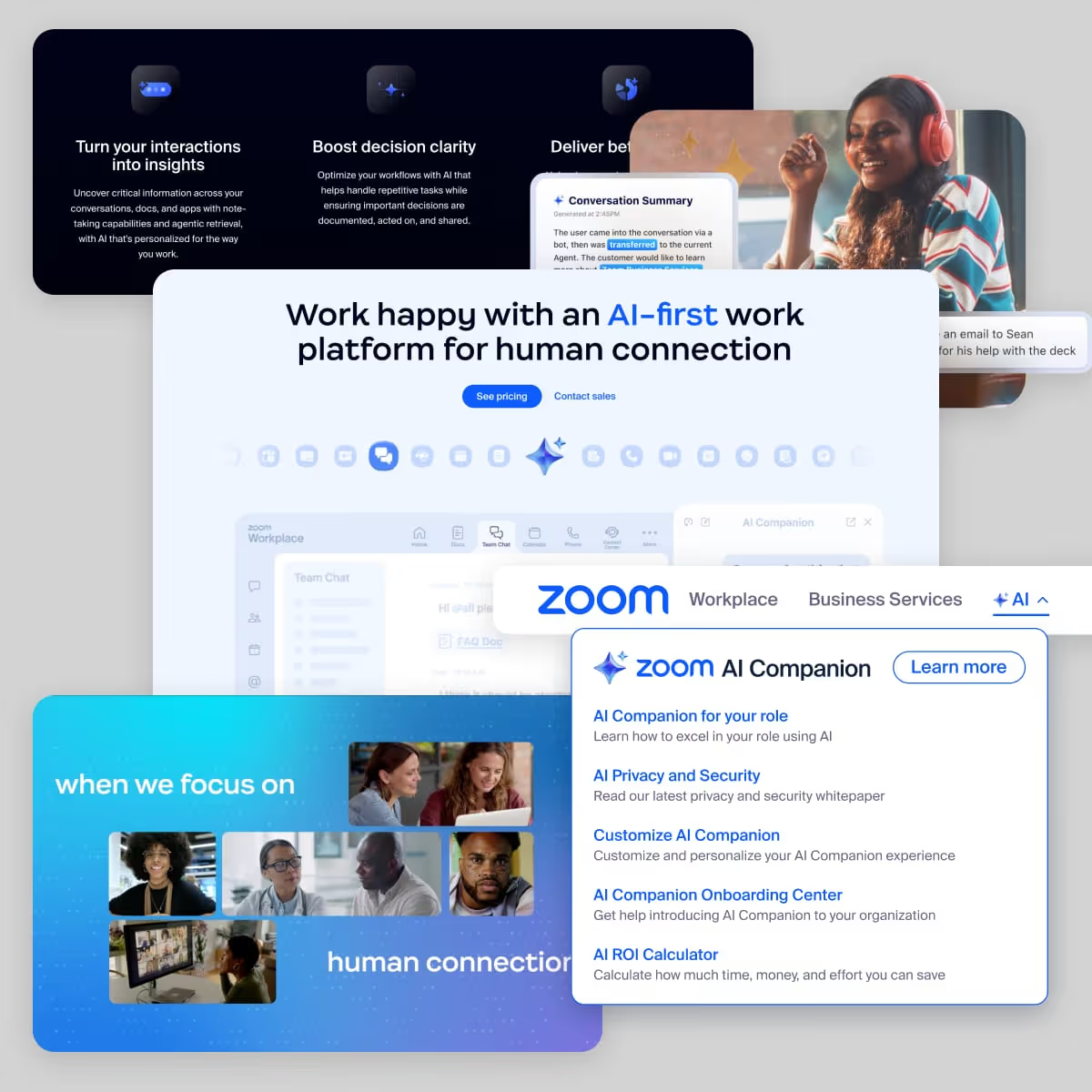
The experience leads with AI (established in the hero and reinforced throughout), but not as a feature claim. AI is presented as a foundational layer across the platform, giving context for how the rest of the product ecosystem is understood. The messaging is outcome-oriented. It leads with what AI enables users to do, not what Zoom has built.
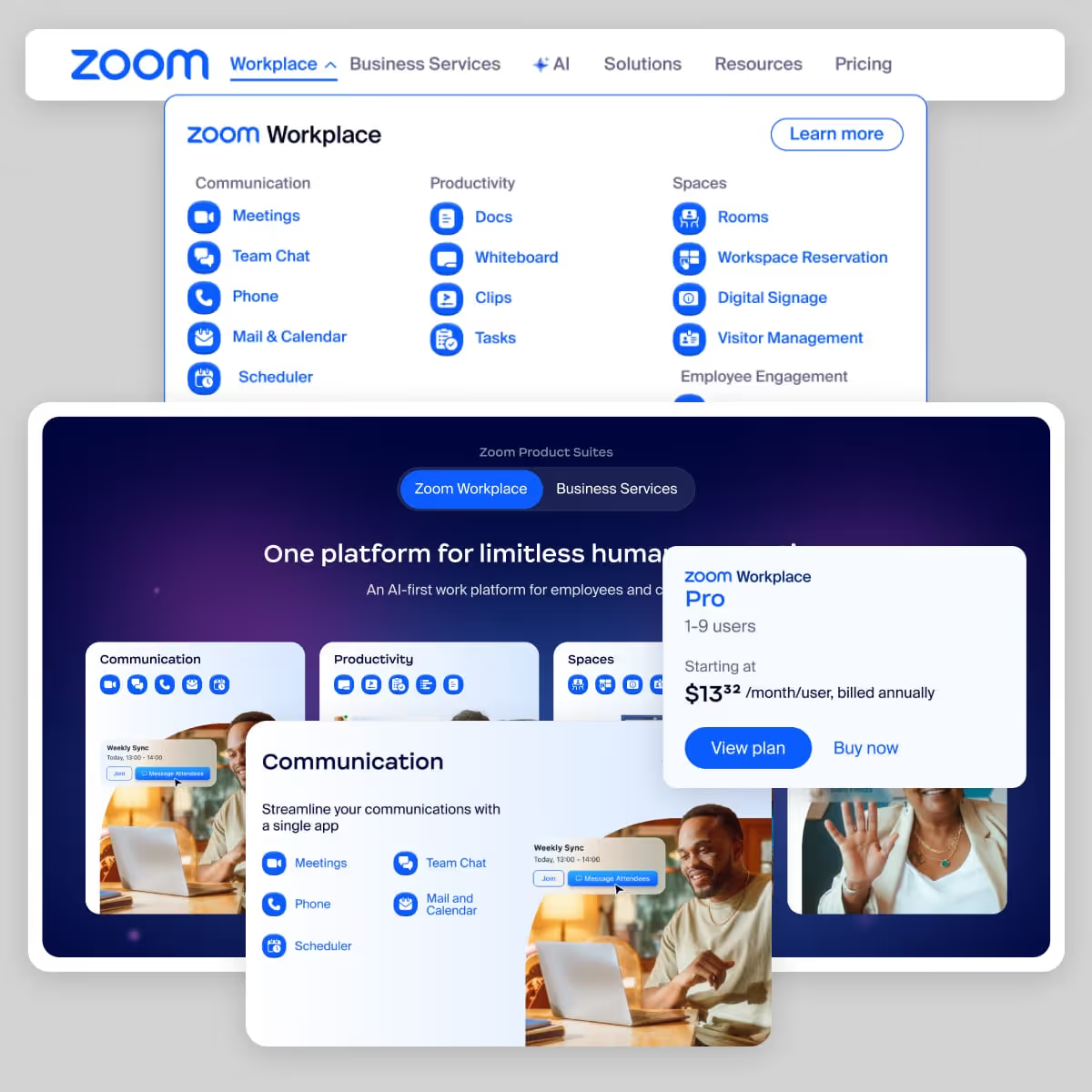
Products are organized and presented as a cohesive system, making it clear how they relate and work together. The navigation, product groupings, and the All Products experience all reinforce these connections, shifting the mental model from individual tools to an integrated platform.
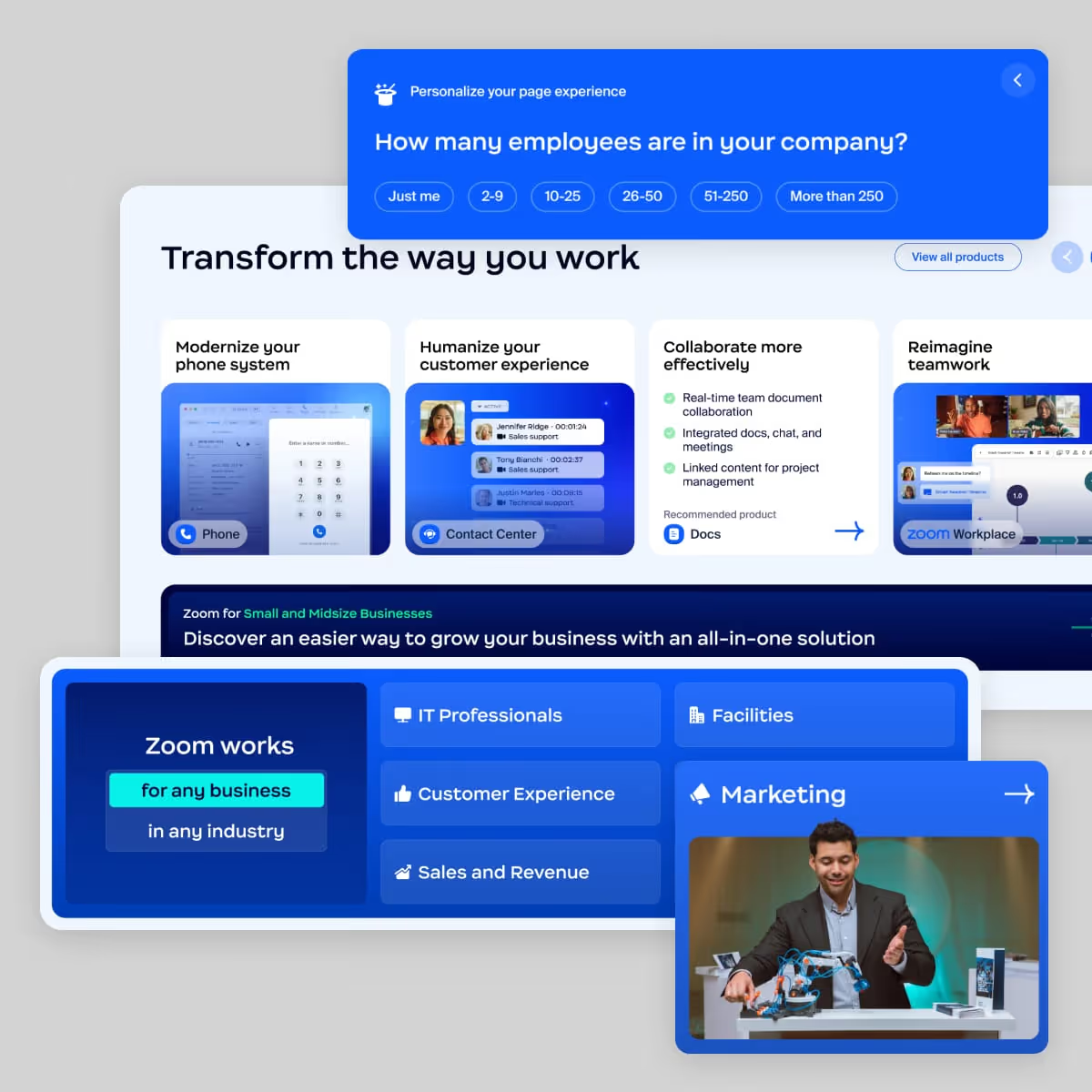
The experience is structured around what users are trying to achieve, connecting use cases to the underlying products. Light personalization surfaces more relevant pathways based on company size and role, helping users navigate into the right tools rather than browsing a catalog.
Outcome
In 10 weeks, we launched a cohesive web experience that positioned Zoom as an AI-first, agentic platform, despite an evolving narrative, a scope that roughly doubled midway through, and complex cross-functional dependencies across more than half a dozen teams.
We didn't wait for a fully defined direction. We created the structure that allowed the work to move forward: using research as a filter on strategy, design as a tool for alignment, and process reinvention to make an impossible timeline workable.
The result established a clear, unified model for how Zoom's platform is presented: AI, products, and user outcomes connected into a coherent experience that could scale across the broader web ecosystem.
The launched experience: AI, products, and user outcomes connected into a single coherent platform story
Our user data didn't just inform the design. It became the argument for why "agentic" needed to mean something specific. When leadership handed us a buzzword, the research gave us the grounds to translate it into something credible.
The three concepts we built before the pivot weren't wasted. They became the vocabulary for making decisions after it. Tangible artifacts turn abstract directives into things teams can actually align around.
Under real constraints, the system behind the work matters as much as the work itself. The modular structure, the daily task force, the decision framework: these weren't project management overhead. They were what made quality possible at this speed.